Art as Organism Biology and the Evolution of the Digital Image by Charissa N Terranova
- Amy Youngs, Ohio Country University, U.s.a.
- Annick Bureaud, Leonardo/OLATS, FR
- Catarina Pombo Nabais, CFCUL, PT
- Charissa North. Terranova, University of Texas at Dallas, USA
- Cosima Herter, author and science consultant, CA
- Dalila Honorato, Ionian University, PT/GR
- Dolores Steinman, University of Toronto, CA
- Hege Tapio, i/o/lab, NO
- Isabel Burr-Raty, Artist, CH/BE
- Jenifer Wightman, The New School – Parsons School of Design, USA
- Jennifer Willet, University of Windsor, CA
- Joan Linder, University of Buffalo, USA
- Kathy High, Rensselaer Polytechnic Institute – Troy, The states
- Kira O'Reilly, University of the Arts Hensinki, IE/FI
- Laura Beloff, IT University of Copenhagen, FI/DK
- Lena Ortega, UNAM, MX
- Louise Mackenzie, Baltic & Northumbria University, UK
- María Antonia González Valerio, UNAM, MX
- Maria Manuela Lopes, Instituto de Ciências Educativas do Douro, PT
- Maria Teresa Cruz, Faculdade de Ciências Sociais e Humanas da Universidade Nova de Lisboa, PT
- Marie Pier Boucher, MIT, CA/United states
- Marta de Menezes, Cultivamos Cultura, PT
- Mary Maggic,Artist, United states/AT
- Minerva Hernandez, Bioscénica, MX
- Mónica Mendes, Faculdade de Belas-Artes da Universidade de Lisboa, PT
- Monika Bakke, Adam Mickiewicz University in Poznan, PL
- Nina Czegledy,University of Toronto, CA
- Nina Sellars, Artist, AU
- Polona Tratnik, AME – ISH, SI
- Regine Rapp, Art Laboratory Berlin, DE
- Roberta Buiani, York University, CA
- Sarah Blissett, University of Roehanpton, UK
- Shannon Bell, York University, CA
- Tagny Duff, Concordia University, CA
- Tarsh Bates, University Western Australia, AU
- Victoria Vesna, UCLA, U.s.

Amy Youngs creates biological art, interactive sculptures, and digital media works that explore relationships between applied science and our changing concept of nature and self. Research interests include: interactions with plants and animals, technological nature follies, constructed ecosystems, and seeing through the eyes of machines. Youngs has exhibited her works nationally and internationally at venues such as the Te Papa Museum in New Zealand, the Trondheim Electronic Arts Middle in Norway, and the Peabody Essex Museum in Salem, MA. She has lectured widely at venues such as the Australian Heart For the Moving Image in Commonwealth of australia and the Walker Art Center. She has published articles in Leonardo and Antennae and her work was profiled in the volume, Art in Action, Nature, Creativity & our Commonage Future. She received her MFA from the School of the Art Institute of Chicago and is currently an Associate Professor of Art at The Ohio State University, where she teaches media arts and eco arts courses.

Annick Bureaud is a Paris-based art critic (collaborator to the French contemporary art mag Art Press) and curator in art-science and applied science. She is the director of Leonardo/Olats (www.olats.org), the French/European sister organisation to Leonardo/ISAST (www.leonardo.info). She wrote numerous articles and co-edited the ebooksWater is in the Air: Physics, Politics and Poetics of H2o in the Arts, Leonardo/ISAST, MIT Press, 2014 andMeta-Life. Biotechnologies, Synthetic Biology, ALife and the Arts, Leonardo/ISAST, MIT Press, 2014. She organised many symposia, conferences and workshops among whichArtmedia Eight: From Aesthetics of Advice to Net Fine art, Paris, 2002 andVisibility – Legibility of Infinite Art. Art and Zippo Gravity: The Experience of Parabolic Flying, Paris, 2003. In 2009, she co-curated the exhibition(Un)Inhabitable? Art of Extreme Environments, Festival @rt Outsiders, MEP/European Firm of Photography, Paris. In 2012, she was the curator of the piece of workTales of a Sea Cow by Etienne de France at the PAV in Torino, Italy. www.annickbureaud.net

Catarina Pombo Nabaiswas built-in in Lisbon in 1976. Caste in Philosophy from the Classic University of Lisbon Faculty of Arts (1998), obtained theDiplôme d'Études Approfondies in philosophy at Université d'Amiens, France(1999) and completed his PhD in Philosophy Université Paris VIII, under the guidance of the philosopher Jacques Rancière (2007) take obtained the maximum degree for a PhD thesis in France. In 2013, he published his first volume, entitledGilles Deleuze: Philosophie et Littérature, the publisherFifty'Harmattan,Paris. It scholarship Post-Doctor at the FCT Eye of Philosophy of Science, Academy of Lisbon (CFCUL) that is integrated member since 2006. From 2007 to 2014 was head of the research group "Science and Art". Information technology is currently head of the subject line Sci Art Philo-LAB.

Charissa Due north. Terranova is a writer and educator. Terranova researches complex biological systems from a cultural purview, focusing on the history of evolutionary theory, biology, and biocentrism in art, architecture, and design. She is writer ofFine art as Organism: Biology and the Evolution of the Digital Prototype (2016) andAutomotive Prosthetic: Technological Mediation and the Machine in Conceptual Fine art (2014), and coeditor with Meredith Tromble ofThe Routledge Companion to Biology in Art and Compages (2016).Terranova is currently coediting with Ellen Chiliad. LevyD'Arcy Wentworth Thompson's Generative Influences in Art, Design, and Architecture: From Forces to Forms, forthcoming from Bloomsbury Press, 2019, and writing a monograph titledBiological science in the British Bauhaus: Morphogenic Modernism in Art, Science, and Design.Associate Professor of Aesthetic Studies, she lectures and teaches seminars at the University of Texas at Dallas on mod and contemporary art and architectural history and theory, the history of biological science in art and architecture, and media and new media art and theory. www.charissanterranova.com

Cosima Herter is a science consultant who specializes in the history and philosophy of scientific discipline, technology and medicine. She is known for her science and story consulting on the accolade-winning BBC America sci-fi television receiver seriesOrphan Black.

Dolores Steinmanwas trained as a Paediatrician and, upon relocating to Canada, obtained her PhD in Cell Biology. Currently she is a Inquiry Associate in the Department of Mechanical Engineering at the University of Toronto and a volunteer Docent at the Fine art Gallery of Ontario. In her research she observes the rapport and the connexion between medical imagery and its non-scientific counterparts. Her pursuit is driven by her peachy interest in placing the ever increasingly technology-based medical research in the larger context of the humanities.

Dalila Honorato, Ph.D, is a facilitator of safe spaces for hosting the interaction of ideas around liminal issues in the frame of Fine art&Sci. Her enquiry focus is on embodiment, monstrosity, the uncanny and the acrobatic balance between phobia and paraphilia. She is Banana Professor in Media Aesthetics and Semiotics at the Ionian Academy, Greece, invitee faculty at Alma Mater Europaea, Slovenia, collaborator at the Eye of Philosophy of Sciences, University of Lisbon, Portugal and member of the Steering Commission of the conference "Taboo-Transgression-Transcendence in Fine art & Scientific discipline". http://ionio.academia.edu/DalilaHonorato

Hege Tapio is based in Stavanger, the oil capital of Kingdom of norway. During her artistic and curatorial practice she has for a long time pursued her involvement in the intersection of art, engineering science and science. With a kitchen bench DIY attitude and through artistic practice she has been inspired to how apparatuses, new technology and life science opens to renewed estimation, creative misuse and disquisitional thinking. She is the founder and director of of i/o/lab – Centre for Future Fine art since 2001, where she has established and curated Article biennial – a festival for the electronic and unstable art. Her piece of work has been exhibited and presented in Greece, China , Latvia, Denmark, England and several places in Norway, along with public commissions and several curatorial projects. http://tapio.no

Isabel Burr-Ratyis a Belgian-Chilean independent filmmaker and performance artist based in Brussels since 2013. She is interested in the ontological crack betwixt the native and the engineered, between the un-licensed knowledge of the resettled, the relocated, and the official facts. Her ethnographic and experiential arroyo brings her to explore and embody the inner topography of isolated landscapes in the planet, in the homo body and in the scientific lab, in order to develop hybrid bio-artistic-narratives that: dig up chapters left out of history books, mistiness the limits between fiction and reality and speculate almost the memory of the future. In her picture work Isabel embodies human Cosmo-visions that are in eco-survival resistance, bringing the imaginative realisms of the inconspicuous and their destructive sense of chronology into the screen. In her performance work she is researching on the operational supra-sensitive principles of totemic anthropomorphism from the lens of bioengineering, combining new media and new materials to create sculptures and lectures that play with synthetic magic and propose bio-autonomy practices.

Trained as a Toxicologist,Jenifer Wightmanis a research scientist specializing in greenhouse gas inventories and life cycle analysis of agriculture, forestry, waste, and bioenergy systems at Cornell University, funded by DoE, USDA, NYS DA&M, and NYSERDA. Her fine art exercise began in 2002 and employs scientific tropes to incite curiosity of biological phenomena and inform an ecological rationality. Her fine art has been commissioned by NYC parks, featured at the Lincoln Heart, BAM, and Imagine Scientific discipline Festival, and is held in collections such equally the Morgan Library, Library of Congress, Gutenberg Museum, Bodmer Museum, and the Danish Royal Library.

Jennifer Willet, Associate Professor in the School of Creative Arts at The University of Windsor (Canada) is an internationally successful artist and curator in the emerging field of bioart. Her work resides at the intersection of art and scientific discipline, and explores notions of representation, the body, ecologies, and interspecies interrelations in the biotechnological field. In 2009 she opened a bioart research and teaching lab INCUBATOR: Hybrid Laboratory at the Intersection of Art, Science, and Ecology, the get-go biological art lab in Canada. In 2018, Willet and INCUBATOR Lab launched a state-of-the-fine art BSL2 theatre/laboratory facility where audiences can view alive multimedia bioartperformances through a glass wall.
world wide web.jenniferwillet.com / www.incubatorartlab.com

Joan Linder.Known for drawings packed with thousands, fifty-fifty hundreds of thousands of tiny, energized marks, Linder'south large-scale images of quotidian subjects notice inspiration from her firsthand surroundings. Her most recent project,Performance Sunshine,explores the toxic chemical and nuclear waste sites on Buffalo / Niagara Falls. The work was exhibited in solo exhibitions at Mixed Greens Gallery, NY; the Albright Knox Art Gallery, Buffalo, The Faulconer Gallery, Grinnell College, IA. Other past notable exhibitions venues include Kunstahallen Brandts, Odense, Denmark; the Aldrich Museum, the Gwanjgu Art Museum, the Bronx Museum, the Queens Museum, and The Museum of Fine Arts Boston. She has received residency fellowships at Yaddo, MacDowell, Villa Montalvo, and a Pollock Krasner Foundation grant. Linder is Chair and Acquaintance Professor of Drawing in the Department of Art at the Academy at Buffalo SUNY and is co-curating an exhibitionHot Spots: Radioactivity in the Landscape,opening at the University of Buffalo Fine art Galleries in September 2018. https://world wide web.joanlinder.com

Kathy High is an interdisciplinary artist, educator working with engineering science, art and biological science. She collaborates with scientists and other artists, produces videos, performances and installations and considers living systems, empathy, fauna sentience, and the social, political and ethical dilemmas of biotechnology and surrounding industries. She has received awards including Guggenheim Memorial Foundation, Rockefeller Foundation, and National Endowment for the Arts. Her artworks accept been shown at documenta 13 (Germany), Guggenheim Museum, Museum of Modern Art, Lincoln Center and Get out Art (NYC), UCLA (Los Angeles), Science Gallery, (Dublin), NGBK, (Berlin), Fesitval Transitio_MX (United mexican states), MASS MoCA (North Adams), Esther Klein Gallery (Philadelphia) and Para-site (Hong Kong). Loftier is Professor in the Arts, and has a lab in the Eye for Biotechnology and Interdisciplinary Studies at Rensselaer Polytechnic Institute, Troy, NY. She hosts bio/ecology+art workshops and is creating an urban nature center in North Troy (NATURE Lab) with community media organization The Sanctuary for Independent Media. She is an ongoing Vivo Art artist in resident with the Eye for Microbiome Sciences & Therapeutic, DePaolo Lab, School of Medicine, Academy of Washington, Seattle. www.kathyhigh.com

Kira O'Reillyis a London based artist; her practice, both wilfully interdisciplinary and entirely undisciplined, stems from a visual art groundwork; information technology employs functioning, biotechnical practices and writing with which to consider speculative reconfigurations aroundThe Body. Only she is no longer sure if she fifty-fifty does that anymore. Since graduating from the Academy of Wales Institute Cardiff in 1998 her piece of work has been exhibited widely throughout the Great britain, Europe, Australia, Communist china and Mexico. She has presented at conferences and symposia on both alive art and scientific discipline, fine art and technology interfaces. She has been a visiting lecturer in the UK and Australia and UsaA in visual art, drama and dance. Near recent new works have seen her practice develop beyond several contexts from art, scientific discipline and applied science to operation, alive fine art and movement work.

Laura Beloff is an internationally acclaimed artist and researcher who has been actively producing fine art works and exhibiting worldwide in museums, galleries and art events since the early on 1990's. She has been a recipient of various grants, art residencies and awards. In 2014 she received with partners the largest fine art grant within Nordic countries from the Nordic Cultural Fund. Her creative and research interests include practice-based investigations into a combination of information, technology and organic thing, which is located in the cross section of fine art, technology and science. The enquiry engages with the fields of: art & scientific discipline, biotechnologies, biosemiotics, and it in connection to art, humans and gild. The outcome of the research and artistic practice is in a course of process-based and participatory installations, programmed conceptual structures and networked wearable objects, additionally to publications and papers. Additionally to her piece of work as an creative person she has worked in academic positions equally a Professor in Oslo, Norway, Visiting Professor in Wien, Republic of austria and currently as Associate Professor and Head of PhD Schoolhouse in Copenhagen, Denmark. http://www.realitydisfunction.org/

Lena Ortega. Creative person, researcher and designer based in Mexico City whose principal line of inquiry are the concepts of atmosphere and embodied feel. The exploration of such notions has led her to experiment through various types of media that range from immersive installations to audio and light fine art. Member of the Fine art+Science interdisciplinary research grouping based in the UNAM with inter national project. She holds a Masters in Visual Arts from the UNAM and a specialization in Media and Design for Printing from SFSU. She has been part of the official selection and honorable mention of animation and video contests and has taught at the Faculty of Arts and Design of the UNAM and recently at La Salle Academy. Currently finishing a PhD in Art History at the UNAM and venturing into sound art exploring the intersections between culture and nature. www.leenalee.internet
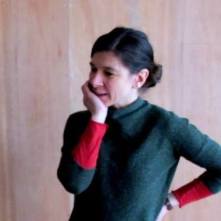
Louise Mackenzie is an artist and researcher, recently completing a PhD in art at Northumbria Academy, an Associate of the Institute of Genetic Medicine, Newcastle Academy and a fellow member of the Cultural Negotiation of Scientific discipline inquiry group. Louise explores notions of human bulldoze, progress, production and waste product. Fatigued towards the mechanisms upon which consumer-led society is founded, elements of her piece of work focus on technical processes and, increasingly, biotechnology. Her current research investigates the use of life as textile, specifically, the insertion of synthetic DNA into living organisms and the emotional weight of working with life in the laboratory. Louise was a finalist in the Bio Art & Design Awards 2015 and recipient of the New Graduate Award at Synthesis, Manchester Science Festival, 2013. She has spoken at Transimage Edinburgh, Leonardo LASER London, ISEA2016 Hong Kong, Bodily Matters, UCL London, and Sonic Environments, Brisbane. Her artworks have been exhibited at the National Library of Kingdom of spain (Madrid), Lumiere (Durham), Summerhall (Edinburgh), BALTIC39 (Newcastle), Bond House (London), Basement half-dozen Collective (Shanghai) and National Taiwan Academy of the Arts (Taiwan). www.loumackenzie.com

María Antonia González Valerio. PhD in Philosophy from the National Autonomous Academy of Mexico (UNAM) with postdoctoral studies in the expanse of aesthetics. Full-time professor of the Faculty of Philosophy and Literature and of the postgraduate programs in Philosophy, Philosophy of Science, Art History and Fine Arts UNAM. She works inside the research line of ontology-aesthetics and the interdisciplinary line of arts, sciences and humanities, specifically in the field of art that uses bio-media. Caput of the inquiry group Arte+Ciencia (Art+Scientific discipline) which gathers artists, scholars and scientists in an interdisciplinary piece of work that produces education at an under and postgraduate level, specialized theoretical inquiry, artistic creation and exhibitions. world wide web.magonzalezvalerio.com

Maria Manuela Lopes is a visual artist and researcher based in Portugal and the UK. Her electric current do is transdisciplinar and based on problems of retentivity and self-identity informed by life sciences and medical research and presented in the course of time-based installations, occasionally including biological materials. She has been working and showing nationally and internationally and also teaching fine arts in Portugal since 1998. She has studied fine arts – sculpture at the FBAUP-Porto, Portugal and did an MA at Goldsmiths College in London. She is before long doing a practice based research degree at UCA Farnham, UK, working with representational strategies of Alzheimer'due south disease in a neuroscience laboratory at Hospital Santa Maria and Molecular Medicine Institute in Lisbon.Maria is also banana-Director of two residency programs: one) 'artists in Labs' Ectopia – Lisbon, and 2) Cultivamos Cultura, an ecological oriented residency program in a farm in Alentejo. She has concurrently been presenting her work internationally at conferences and also publishing.

Maria Teresa Cruz teaches at the Communication Sciences Department, in Social and Human Sciences Faculty of the New University of Lisbon (UNL) in the fields of Image Theory, Media Aesthetics and Media Art Theory. She is the director of the Research Center on Communication and Language, where she also coordinated the research line on «Art and Communication» (2007-2012) and created the Periodical Interact – Fine art, Culture and Technique (www.interact.com). Her inquiry interests focus upon cultural techniques, as well as gimmicky art and postal service-media aesthetics.

Marie-Pier Boucher'southward piece of work brings concerns with globalization, aesthetics, and politics to bear upon the study of interplanetary habitation, environmental degradation, biotechnology, global health and architectural and urban infrastructures. Her specific focus is blueprint for extreme environments such every bit outer space. Collaborator on Adaptive Deportment, she co-edited Heteropolis (2013) and Adaptive Actions (Madrid) (2010) an participated in collective exhibitions (Tokyo Wonder Site (TWS), Japan, 2015; Leonard & Bina Ellen Art Gallery, Montreal, 2010; Biennale Madrid Abierto, Spain, 2010). Her inquiry residencies include: Johnson Space Center, NASA, Houston, USA (2014); Banff Center for the Arts, Canada (2011); Max Planck Establish for the History of Science, Berlin, Germany (2010) and; SymbioticA, Western Commonwealth of australia (2006). She holds a PhD in Fine art, Art History and Visual Studies from Duke University (2015) and is currently a Mellon Postdoctoral Fellow at MIT's Center for Fine art, Scientific discipline and Technology (CAST) + Plan in Science, Technology and Society (2017-2019).
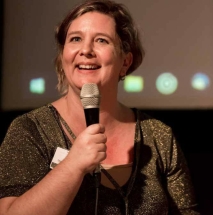
Marta de Menezes is a Portuguese creative person with a degree in Fine Arts past the Academy in Lisbon, a MSt in History of Fine art and Visual Civilization by the University of Oxford, and a PhD candidate at the Academy of Leiden.She has been exploring the intersection between Art and Biological science, working in research laboratories demonstrating that new biological technologies can be used as new fine art medium. In 1999 de Menezes created her first biological artwork (Nature?) by modifying the fly patterns of alive butterflies. Since so, she has used diverse biological techniques including functional MRI of the brain to create portraits where the listen can be visualised (Functional Portraits, 2002); fluorescent DNA probes to create micro-sculptures in homo cell nuclei (nucleArt, 2002); sculptures made of proteins (Proteic Portrait, 2002-2007), Dna (Innercloud, 2003; The Family, 2004) or incorporating live neurons (Tree of Knowledge, 2005) or bacteria (Decon, 2007). Her piece of work has been presented internationally in exhibitions, articles and lectures. She is currently the artistic director of Ectopia , an experimental art laboratory in Lisbon, and Director of Cultivamos Cultura in the South of Portugal. http://martademenezes.com

Mary Maggic is a not-binary artist working at the intersection of biotechnology, cultural discourse, and ceremonious disobedience. Their work spans documentary video, scientific methodology, public workshopology, operation, and large scale installation. Maggic'southward well-nigh recent projects Open up Source Estrogen and Estrofem! Labgenerate DIY protocols for the extraction and detection of estrogen hormone from bodies and environments, demonstrating its micro-performativity and potential for mutagenesis, i.e. gender-hacking. They hold a BSA in Biological science and Art from Carnegie Mellon University and a MS in Media Arts and Sciences from MIT Media Lab and have had the privilege to exhibit and/or perform at Haus der Kulturen der Welt (Berlin), OK Center (Linz), Haus der elektronischen Kunst (Basel), Jeu de Paume (Paris), Found of Contemporary Arts (London), and Spring Workshop (Hong Kong).
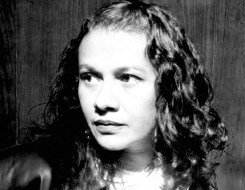
Minerva Hernandez.Transdisciplinary creative person. Her work revolves effectually collective memory, the relationship between body, technology, science, poetry and vitality. She studied Photography and Cinematography in Brussels, Belgium. She is an honorary member of the National Arrangement of Creators since 2010 and is role of the Fine art and Science research and creation grouping of the UNAM. She currently directs the transdisciplinary Bioscénica company, dedicated to creating, developing and producing proposals that combine arts, sciences and technology. http://bioscenica.mx




Mónica Mendes is a digital media artist, designer and professor at the University of Lisbon. She is currently coordinating the Multimedia Fine art PhD and collaborating in the Sustainability Sciences PhD of the University of Lisbon. She is also a researcher at LarSys / Madeira Interactive Technologies Institute (M-ITI), collaborator at Fine Arts Research Center (CIEBA) and a member of Food, Farming and Forestry College (F3). Additionally, she co-founded altLab, a hackerspace dedicated to independent experimentation in alternative media, and the Creative Coding Circle, an informal commonage focused on creative programming. Interested in designing for a more than sustainable earth, Mónica created the ARTiVIS project, exploring real-time interactive systems at the intersection of Fine art, Science and Engineering science. The research has been carried out with multidisciplinary collaborations from research institutions, hackerspaces and local populations, and has taken place in customs, culture and art events such equally art residencies, meetings and workshops, conferences and exhibitions. Mónica holds a PhD in Digital Media (UT Austin-Portugal Program), a Master in Multimedia Educational Communication (Universidade Aberta) and a degree in Communication Design (Faculdade de Belas-Artes). http://monicamendes.info

Monika Bakkeis Associate Professor in the Philosophy Section at the Adam Mickiewicz University, Poznań, Poland. She writes on contemporary art and aesthetics with a detail interest in posthumanist, transspecies and gender perspectives. She is the author of Bio-transfigurations: Art and Aesthetics of Posthumanism (2010, in Polish) and Open Body (2000, in Polish) co-writer of Pleroma: Fine art in Search of Fullness (1998), and editor of Australian Ancient Aesthetics (2004, in Smooth), Going Aerial: Air, Art, Compages (2006) and The Life of Air: Dwelling house, Communicating, Manipulating (2011). From 2001 till 2017 she was working as an editor of a Shine cultural journal Czas Kultury [Time of Culture].

Nina Czegledy, creative person, curator, educator, works internationally on collaborative art & science & engineering science projects. The changing perception of the human being trunk and its surroundings besides as the paradigm shifts in the arts informs her collaborative projects. She has exhibited and published widely, won awards for her artwork and has initiated, researched, atomic number 82 and participated in forums and symposia worldwide.

Nina Sellars is a visual artist and researcher who works across the disciplines of fine art, science and humanities. Her practice is focused on the way anatomy shapes our agreement of the body, identity and subjectivity. Sellars' interest in anatomy has taken her from working in classical art studios and wet anatomy labs to working in physics labs and medical imaging facilities – hither she critically engages with the cultural implications of anatomy. Essentially, her research questions how concepts of anatomy announced meaningful to us in the 21st century – an era defined by discourses of the posthuman. Sellars' artwork has been exhibited widely, including most recently at the Museum of Gimmicky Fine art, Sydney, Australia – New Romance: Art and the Posthuman (2016); ArtScience Museum, Singapore – Man+: The Futurity of Our Species (2017); Perth Institute of Gimmicky Art – HyperPrometheus (forthcoming, 2018). In 2017, Sellars was artist in residence at SymbioticA, biological arts laboratory, The Academy of Western Commonwealth of australia, to further her research on man adipose tissue (aka fat), assisted by funding from the Commonwealth of australia Council. Previously, Sellars was a Inquiry Swain at the Alternate Anatomies Lab, an arts and robotics lab directed by the performace artist, Stelarc, at Curtin Academy, Perth, WA (2014 – 2016).
world wide web.ninasellars.com

Polona Tratnik , Ph.D., is Dean of Alma Mater Europaea – Institutum Studiorum Humanitatis, Faculty and Research Institute for Humanities, Ljubljana, where she is a Professor and Caput of Research as well. She as well teaches courses at the Kinesthesia for Media and Communication at Singidunum University in Serbia, at the Academy of Fine Arts and Blueprint of the University of Ljubljana, at the Faculty of Education of the University of Maribor and at the Faculty for Design of the Academy of Primorska. She used to exist the Head of the Department for Cultural Studies at the Faculty for Humanities of the University of Primorska. In 2012 she was a Fulbright Visiting Scholar, likewise as a Guest Professor at the Academy of California Santa Cruz. She was a Guest Professor too at the Capital Normal University Bejing (People's republic of china), at the Faculty for Art and Design Helsinki TAIK (Republic of finland), and at the Universidad Nacional Autónoma de México (Mexico Urban center). She is president of the Slovene Social club of Aesthetics (since 2011) and an Executive Commission Member of the International Association of Aesthetics. She has authored 7 monographs and one proceeding as unmarried author, including the Hacer-vivir más allá del cuerpo y del medio(Mexico City: Herder, 2013), Art as Intervention(Sophia, 2017) and Conquest of Body. Biopower with Biotechnology(Springer, 2017). Polona Tratnik is a pioneer bio artist exhibiting worldwide at shows such as Ars Electronica festival and BEAP festival in Perth.
http://world wide web.polona-tratnik.si

Regine Rappis an art theoretician and curator. Her specific fields of research for 20th and 21st century art are installation fine art, image text theory, artist books, and art & science collaborations. She worked as Assistant Professor for Art History at the Burg Giebichenstein Art Academy Halle until Autumn 2013. She is co-managing director of Fine art Laboratory Berlin, which she co-founded in 2006. Regine curated over 30 exhibitions (exhibition serial on Time and Engineering science, Synaesthesia and macro/microbiologies) and has published several books. Concurrent to the exhibition Sol LeWitt. Artist'south Books in 2011 she conceived and realised the international Sol LeWitt_Symposium at Fine art Laboratory Berlin. Together with Christian de Lutz she developed the international transdisciplinary conference Synaesthesia. Discussing a Phenomenon in the Arts, Humanities and (Neuro-)Scientific discipline, 2013 at Art Laboratory Berlin. Her publication [macro]biologies & [micro]biologies. Art and the Biological Sublime in the 21st Centuryreflects theoretically Fine art Laboratory Berlin's last series from 2014-xv. In 2016-17 together with Christian de Lutz she conceived the series Nonhuman Agents with exhibition, workshops, performances, and an international interdisciplinary briefing (Nov 2017), which is at present published online.
http://www.artlabotatory-berlin.org

Roberta Buianiis an interdisciplinary artist, media scholar and curator based in Toronto. She is the co-founder of the ArtSci Salon at the Fields Institute for Research in Mathematical Sciences (Toronto) and a co-organizer of Light amplification by stimulated emission of radiation Toronto. Her research-creation work is mobile, itinerant and collaborative, exploring how scientific and technological mechanisms interpret and transform the natural and human globe, and what happens when they are taken outside of their traditional context and relocated through artistic and cartographic practices. Her work was exhibited in Toronto at the Ryerson University Faculty of Architecture and Artscape Youngspace; and was featured at Transmediale, the Hemispheric Found Encuentro, Immigrant Movement International (Queens), and RPI amid other. Recently, she has launched a series of curatorial experiments in "squatting academia", aiming at repopulating abandoned spaces inside the university with collaborative works in art and science and at filling formal spaces of enquiry with site-specific installations and performances. She teaches communication and cultural studies at York Academy. http://atomarborea.net

Sarah Blissett is an artist, writer and dramaturg, currently studying for a PhD in Functioning Studies at the University of Roehampton. She holds a BA from the University of Cambridge and an MA from the Majestic Fundamental School of Oral communication and Drama. Her inquiry explores Food and Ecology in Operation, through an investigation into algae organisms and ecosystems as 'active ingredients' in planetary ecology. Ecological and philosophical issues of multispecies entanglement and trans-corporeal relations are core to this food-based practice, where cloth/semiotic subjects are digested in a diverseness of ways. Her work considers the implications of these ideas through operation studies inquiry, which draws on Poetic Biopolitics, Ecomaterialism and Posthuman Feminism.

Shannon Bell, a Canadian performance philosopher who lives and writes philosophy-in-action, is a Professor of Political Science at York University, Toronto, Canada. Her books include:Fast Feminism (2010),Reading, Writing and Rewriting the Prostitute Torso (1994),Whore Carnival (1995), Bad Attitude/s on Trial co-authored (1997, republished 2017), The Book of Radical General Semantics co-edited (2016),Subversive Itinerary: The Thought of Gad Horowitz, co-edited (2013) andNew Socialisms co-edited (2004). Bell is currently working on shooting theory ––video-imaging philosophical concept such as Heidegger'due south 'stillness', Husserl'due south 'epoché', Batialle's 'waste' and 'expenditure', Weil'south 'attention', Deleuze's 'deterritorialization', Virilio's 'vision automobile' and 'blow' and Levinas' 'elemental'.
http://www.yorku.ca/shanbell/ https://vimeo.com/user1866723

Tagny Duff is an creative person and scholar working across media fine art and microbiology, with a particular interest in microbial interaction and scientific practices from a cultural point of view. Duff has exhibited biological fine art works nationally and internationally in venues such the Science Gallery in Ireland (2011) and Espace Multimedia Gatner, France (2015). She has published numerous peer-reviewed articles on the overlap between art and science methodologies and approaches including the recent publication "Mangling Methods Across Performance Research, Biological Arts and Life Sciences" published by Media-N Periodical of the New Media Caucus. Duff is A ssociate Professor in the Department of Communication Studies at Concordia University and since 2009 is the director/founder of Fluxmedia, a network for researchers engaging in collaboration beyond art and the life sciences and Speculative Life Lab at Milieux Institute for Arts, Culture and Technology at Concordia University. https://tagnyduff.com
http://world wide web.fluxnetwork.internet / https://speculativelifebiolab.com / https://tagnyduff.web log/

Tarsh Bates is an artist/researcher interested in the aesthetics of interspecies relationships and the human as a multispecies ecology. She has worked variously as a pizza commitment driver, a fruit and vegetable stacker, a toilet paper packer, a researcher in compost scientific discipline and waste direction, a honeybee ejaculator, an art gallery invigilator, a raspberry picker, a lecturer/ tutor in fine art/science, fantasy, art history and gender & applied science, an editor, a bookkeeper, a car detailer and a life cartoon model. Tarsh is a postdoctoral enquiry associate at SymbioticA, UWA, supported by The Seed Box, an international environmental humanities collaboration based at Linköping University in Sweden and funded by Mistra and Formas. She is peculiarly enamoured withCandida albicans. http://www.symbiotica.uwa.edu.au

Victoria Vesna, Ph.D., is an Creative person and Professor at the UCLA Department of Design Media Arts and Director of the Art|Sci Center at the School of the Arts (North campus) and California NanoSystems Plant (CNSI) (South campus). Although she was trained early on on every bit a painter (Faculty of Fine arts, Academy of Belgrade, 1984), her curious mind took her on an exploratory path that resulted in work can be defined as experimental creative inquiry residing between disciplines and technologies. With her installations she investigates how communication technologies impact collective beliefs and perceptions of identity shift in relation to scientific innovation (PhD, CAiiA_STAR, Academy of Wales, 2000). Her work involves long-term collaborations with composers, nano-scientists, neuroscientists, evolutionary biologists and she brings this experience to students. Victoria has exhibited her work in twenty+ solo exhibitions, seventy+ group shows, has been published in 20+ papers and gave 100+ invited talks in the last decade. She is the Due north American editor ofAI & Societyjournal (Springer Verlag, UK) and in 2007 published an edited volume –Database Aesthetics: Art in the Age of Information Overflow (Minnesota Press) and some other in 2011 —Context Providers: Conditions of Meaning in Media Arts (co-edited with Christiane Paul and Margot Lovejoy) Intellect Ltd, 2011. Currently she is working on a serial Art Science & Technology based on her online lecture class. http://victoriavesna.com
Source: https://cultivamoscultura.com/confirmed-guests/
0 Response to "Art as Organism Biology and the Evolution of the Digital Image by Charissa N Terranova"
Post a Comment